Decoding Risk: The Purpose of Carrier Screening Explained
The term "carrier" often evokes fear; however, scientifically, being a carrier is not synonymous with having a disease. Instead, it signifies possessing one copy of an altered or recessive gene while remaining phenotypically healthy because the other copy functions normally. In essence, carriers carry genetic information that, when passed down to offspring, has the potential to manifest as a health condition.
Therefore, carrier screening involves testing both partners—a crucial step often overlooked in the initial discussions about fertility planning. This screening identifies if either individual carries one or more genes associated with specific recessive conditions (such as Cystic Fibrosis, Sickle Cell Anemia, Spinal Muscular Atrophy, and many others).
The mechanism of risk operates through Mendelian inheritance principles. Specifically, a child only inherits the condition if they receive two copies of the altered gene—one from each parent. If both partners carry the same recessive mutation, their children have a certain statistical probability (typically 25%) of inheriting the affected genotype. This is why screening both parties provides the most accurate and complete risk assessment for the couple as a unit.
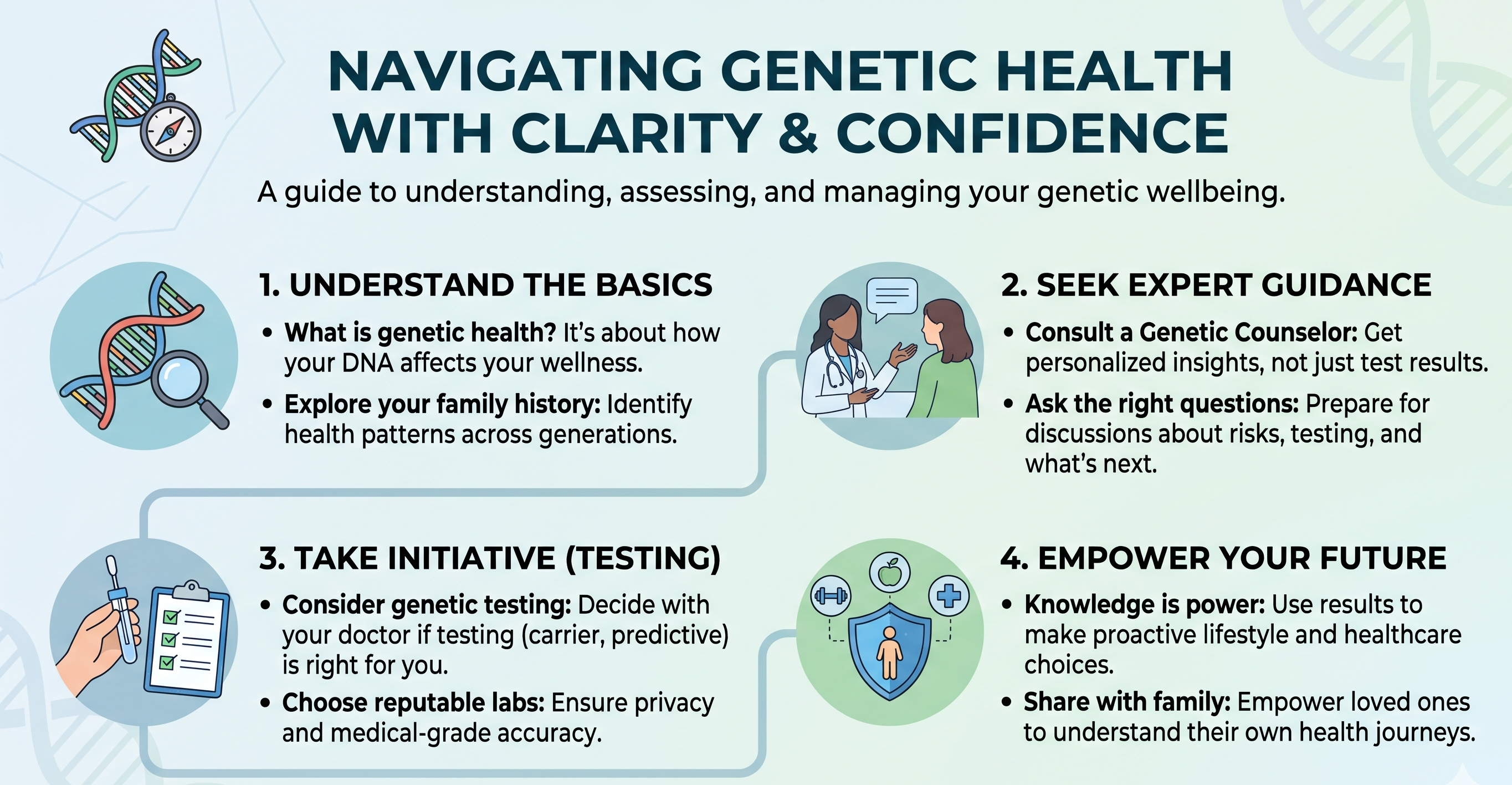
Moreover, genetic counseling plays an indispensable role throughout this process. Genetic counselors do not deliver diagnoses; rather, they act as highly trained interpreters of complex biological data. They patiently explain:
- What specific genes are being tested for (the panel).
- What the statistical risk associated with a positive result means in practical terms for family planning.
- The available reproductive options that align with the couple’s personal values and goals.
In short, carrier screening transforms an abstract worry into a concrete, quantifiable piece of data. This shift from vague anxiety to precise information allows couples to move forward with deliberate intent, recognizing their genetic profile not as a limitation, but as a comprehensive part of their unique biological identity. Furthermore, this knowledge empowers families to make choices whether that involves pre-conception lifestyle adjustments, prenatal monitoring, or advanced reproductive technologies that fit seamlessly into their life plans.
Beyond Recessive Genes: Chromosomal Integrity and Advanced Testing Pathways
While recessive gene screening addresses specific inherited conditions, the scope of genetic evaluation extends far beyond single-gene disorders. We must also address chromosomal integrity—the fundamental architecture of the sperm and egg cells. Errors at this level affect viability and are often tied to developmental concerns rather than just inherited diseases.
Specifically, we refer here to aneuploidy—abnormal numbers of chromosomes (e.g., having an extra 21st chromosome, which causes Down syndrome). These issues arise not from simple gene mutations, but from errors during meiosis (the process that creates sperm and egg cells) where the separation of homologous chromosomes fails.
Consequently, assessing chromosomal health requires highly specialized diagnostic tools. This leads us to discuss PGT testing (Preimplantation Genetic Testing), which represents a sophisticated intersection of reproductive medicine and genetics. PGT is not typically used as a primary screening tool for general risk assessment; rather, it functions as a targeted diagnostic test utilized alongside assisted reproductive technologies (ART), such as In Vitro Fertilization (IVF).
How does PGT work? After embryos are created in a laboratory setting via IVF, specialists can take a microscopic biopsy of one or two cells from the trophectoderm layer. These few cells allow scientists to analyze the embryo’s genetic content before implantation. This analysis confirms chromosomal normalcy and identifies any specific single-gene disorders present.
Moreover, PGT provides an unparalleled level of predictive information, allowing parents to select embryos with normal chromosomal complements. In contrast to prenatal diagnosis, which occurs after pregnancy and carries its own set of risks, preimplantation genetic testing allows for selection before the gestation period begins. This technological leap represents a paradigm shift in family planning, offering couples carrying higher reproductive risks an incredibly precise pathway toward parenthood while proactively managing potential health outcomes.
Knowledge as Compass: Charting Your Personalized Path to Parenthood
The final, and most crucial, section involves translating scientific data into human action. A genetic report, whether detailing a carrier status or indicating the need for PGT, is merely a starting point; it is not an ending point. Therefore, the power of this field lies in the guidance provided by genetic counseling.
Ultimately, genetic testing should never feel like a medical verdict against a family's hopes. It should function as an illuminating map, showing various routes and terrains available to you on your journey toward conception.
The decision-making process is profoundly personal and requires deep introspection alongside scientific data. Once tested, couples face several potential paths:
- Acceptance and Monitoring: Couples may accept their risk profile while choosing to monitor future pregnancies closely through advanced prenatal screening methods (e.g., non-invasive prenatal testing).
- Risk Mitigation via Lifestyle: In some cases, knowledge of genetic factors prompts lifestyle changes designed to promote overall cellular health, thereby supporting the integrity of gametes.
- Technological Intervention: For couples with higher risks or specific diagnoses, options like PGT combined with IVF provide a highly selective and informed reproductive route.
In summation, taking the time for comprehensive genetic testing for conception allows individuals to engage in a conversation about family planning that is rooted in verifiable data, not guesswork. By embracing the science and critically, by partnering with compassionate genetic counselors who champion knowledge over fear—you gain profound control over your narrative. You transform potential ambiguity into empowered choice.
The path to building a family requires dedication, hope, and the most accurate information available. Thus, we encourage couples to view genetic evaluation not as an obstacle course, but as a sophisticated set of navigational tools, guiding them confidently toward their desired outcome.